Your morning coffee spill, your child’s grass-stained jeans, last night’s pasta sauce mishap—these everyday stains often feel impossible to remove. Traditional cleaning methods lean on brute force: hot water, harsh chemicals, and scrubbing. Modern laundry detergents, however, use a more precise tool borrowed from nature: enzymes.
Enzymes act as biological catalysts that dismantle stains at the molecular level. Instead of relying on aggressive chemicals, they target specific bonds within stain molecules, breaking them into smaller, water-soluble fragments that wash away easily.
The Enzyme Advantage
Enzymes are proteins designed to accelerate specific chemical reactions. In detergents, this precision targeting allows them to:
- Recognize and break down particular soil types
- Work effectively at normal washing temperatures
- Avoid damage to fabrics and dyes
- Continue working throughout the wash cycle since they aren’t consumed in the reaction
Unlike generalized cleaning agents, enzymes operate with efficiency and selectivity, making them highly effective for stain removal without the drawbacks of harsher chemistry.
The Enzyme Arsenal
Different enzymes specialize in different stains:
- Proteases break down proteins in blood, sweat, and grass
- Lipases target fats and oils like butter or makeup
- Amylases digest starchy residues from pasta and sauces
- Cellulases release trapped soils and help refresh cotton fibers
- Pectinases dismantle fruit and vegetable stains bound by pectin
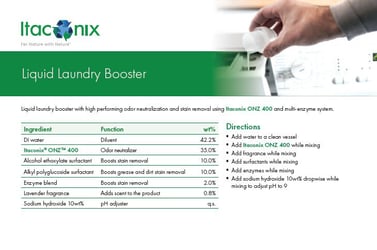
By combining multiple enzyme types in one formulation, detergents can address a wide spectrum of stains, including complex soils that layer protein, oil, and starch together.
Why Enzymes Need Support
Enzymes are powerful but also sensitive, requiring the right conditions to stay active. Most perform best in mildly alkaline environments, where the pH is high enough to promote activity but not so extreme that it destabilizes their structure. Temperature is another critical factor: in cooler water enzymes work more slowly, while in very hot water they can become permanently deactivated. Water chemistry also plays a role, as minerals like calcium and magnesium can bind to enzyme sites and block their function. Finally, enzymes need sufficient time in contact with stains to complete their reactions.
Because of these sensitivities, detergent formulations pair enzymes with stabilizing ingredients that help maintain pH, control mineral interference, and keep soils suspended once broken down—ensuring enzymes can work at their full potential.
Cold Water Performance
One of the most important advantages of enzymes is their effectiveness in cold water. This not only prevents fabric and color damage but also dramatically reduces energy use during washing. Advances in enzyme engineering and supporting formulation chemistry now allow detergents to achieve high performance at low temperatures, which benefits both consumers and the environment.
Enzyme Limitations and Balanced Formulations
Although enzymes are highly effective, overuse of certain types can damage fibers, and their activity can be inhibited in hard water or highly alkaline conditions. Balanced formulations resolve these issues by combining multiple enzymes with complementary stabilizers, dispersants, and chelators that preserve fabric quality while maintaining cleaning power.
Informing Better Formulations
Enzyme detergents achieve their full potential when supported by modern formulation chemistry. Plant-based polymers and chelating agents, such as those developed by Itaconix, play a key role in this balance. For example, dispersant polymers help prevent redeposition of soils once stains are broken down, while calcium-binding agents preserve enzyme activity in hard water. These supporting ingredients ensure enzymes operate under optimal conditions, allowing detergents to deliver consistent performance across fabric types, stain categories, and water qualities, while advancing the move toward safer, more sustainable cleaning.